Namso CC Checker: How to Validate Credit Card Numbers Online in 2026
If you’ve searched for Namso CC Checker, you’re probably trying to understand whether a card number is correctly formatted, whether a BIN is valid, or whether a generated card passes basic verification checks. The short answer is simple: a card checker analyzes card structure, BIN information, and mathematical validity using the Luhn Algorithm. It does not confirm account balances, authorize transactions, or provide access to any financial account.
That distinction matters because many users confuse format validation with real-world card verification. A checker can confirm that a number follows accepted standards. It cannot confirm that a card is active, funded, or approved by a bank.
For developers, testers, students, and payment-system learners, tools like the checker available through Thenamsogen.com provide a quick way to validate card formats before using them in testing environments.
What Is Namso CC Checker?

A card checker is a validation tool that analyzes the structure of a card number and determines whether it follows standard formatting rules used across the payment industry.
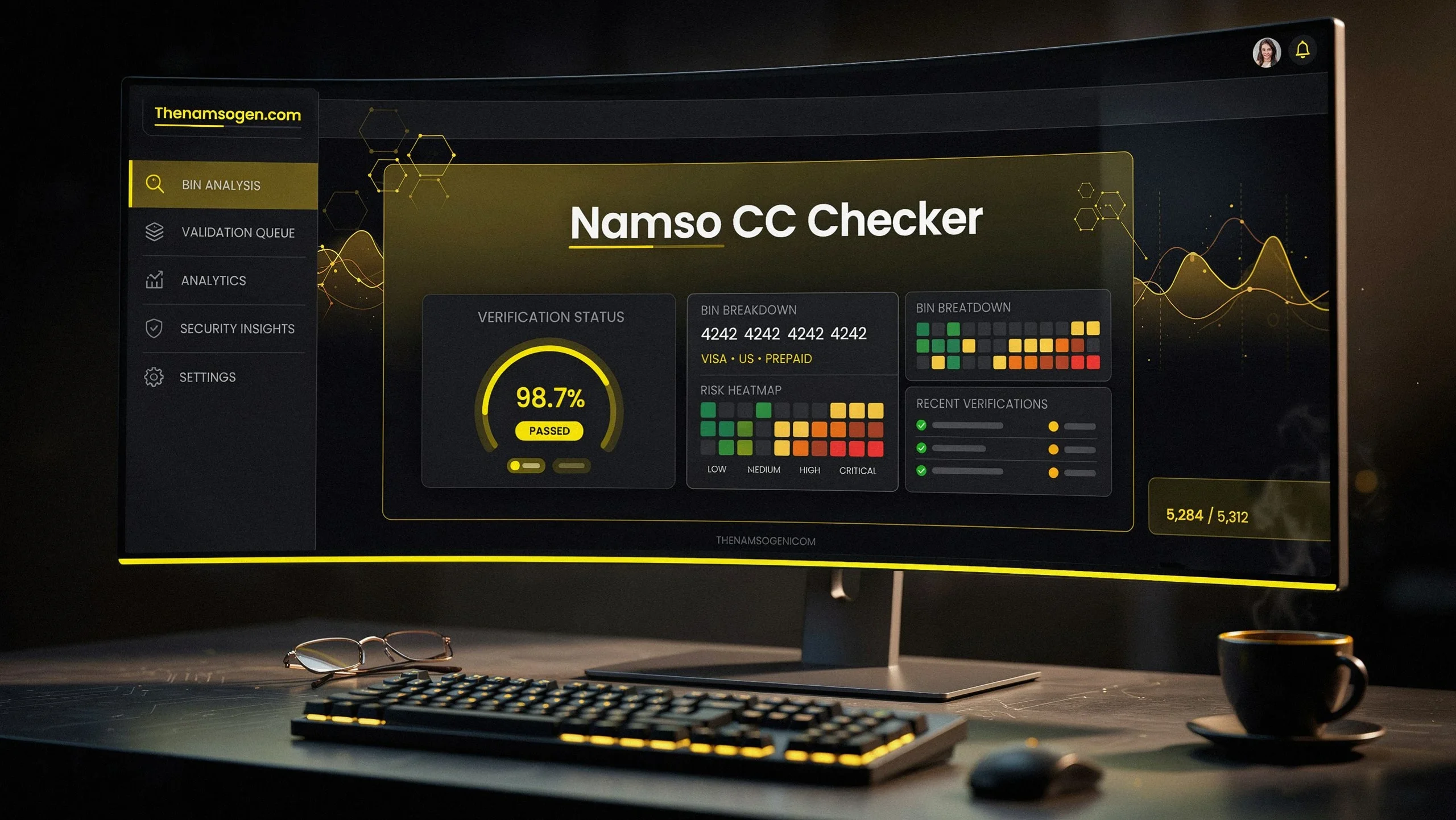
Most modern card checkers perform several validation steps at once. The system checks the BIN, evaluates the number length, identifies the card network, and runs the Luhn checksum formula to determine whether the number is mathematically valid.
Many people assume a mathematically valid card number must belong to a real account. That assumption is incorrect.
A number can pass every format test and still have no connection to an actual payment account. Developers encounter this distinction regularly when testing checkout systems and payment forms.
The main purpose of a checker is validation, not authorization.
How Does a Credit Card Checker Work?
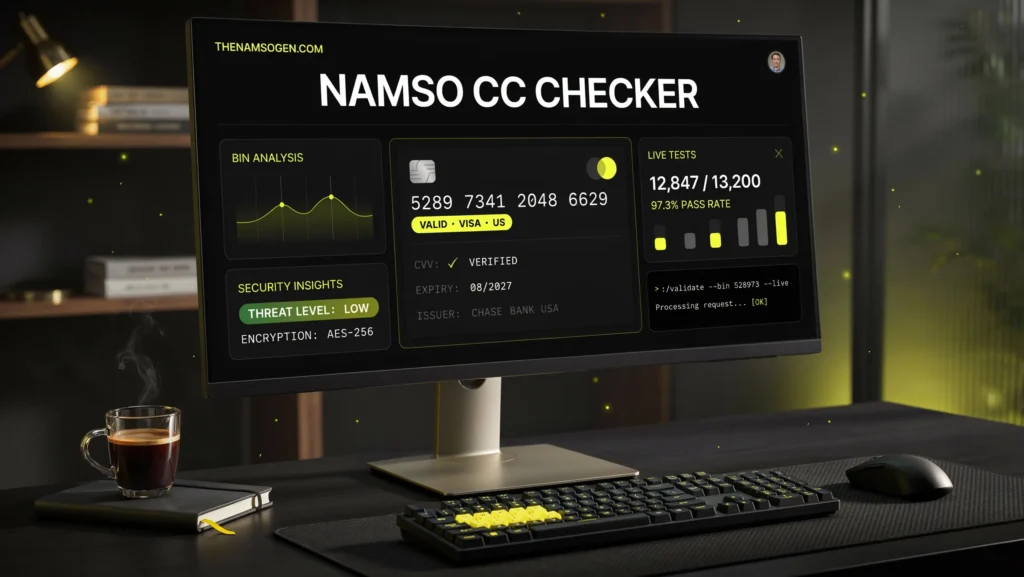
Every card number follows a structured format. The first digits identify the issuing institution, while the remaining digits follow predefined numbering patterns.
A checker analyzes these components individually before producing results.
The process usually takes less than a second because modern validation methods rely on mathematical rules rather than direct communication with financial institutions.
Understanding each validation layer helps explain what a checker can and cannot do.
BIN Validation
BIN stands for Bank Identification Number.
The BIN represents the first six to eight digits of a payment card and provides information about the issuing bank, network, and card category.
When a number is entered into a checker, the system compares the BIN against known industry patterns.
This process can reveal:
- Card network
- Card type
- Issuing institution
- Country of issuance
- Industry category
Developers often use BIN validation during payment testing because it helps simulate different card scenarios without requiring actual customer information.
Luhn Algorithm Verification
The Luhn Algorithm remains one of the most widely used validation methods in payment systems.
Created by Hans Peter Luhn in the 1950s, the formula calculates a checksum digit that helps detect accidental errors in card numbers.
A number that fails the algorithm is almost certainly invalid.
A number that passes the algorithm is only mathematically valid.
That difference is where many online misconceptions begin.
Passing a Luhn check does not mean a card is active. It simply means the number follows the expected mathematical pattern.
Card Format Analysis
Beyond BIN and checksum validation, a checker evaluates overall structure.
Different card networks follow different numbering standards.
Visa commonly uses sixteen-digit formats beginning with specific prefixes. Mastercard follows a different numbering range. American Express uses another structure entirely.
A checker compares entered values against these known standards and identifies inconsistencies immediately.
Namso CC Checker vs Live Card Verification
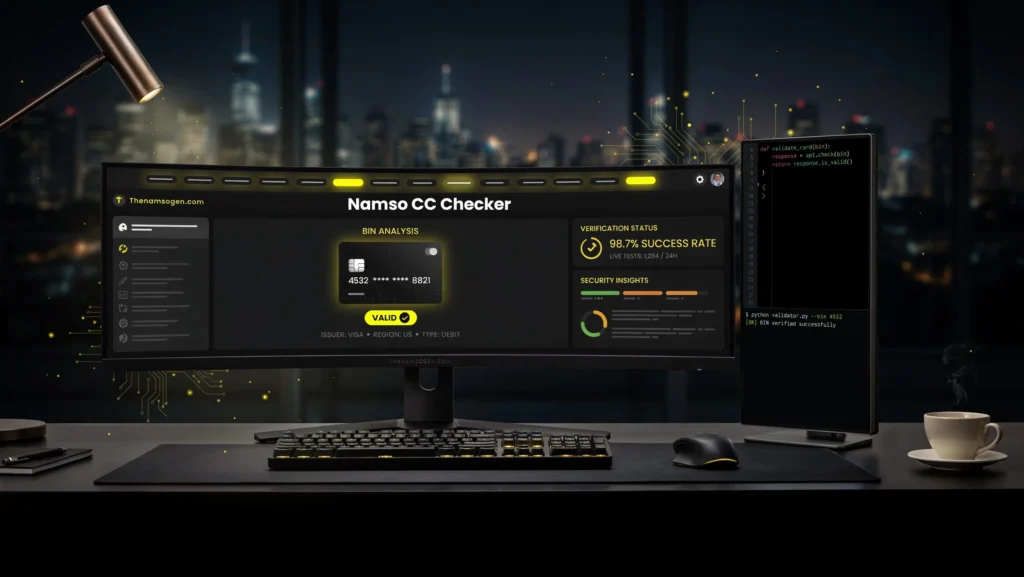
One of the most misunderstood topics involves the phrase “live checker.”
People often assume a live check means direct confirmation from a bank.
In reality, most online checking tools perform format validation rather than real-time banking verification.
The table below highlights the difference.
| Feature | Card Checker | Bank Authorization |
|---|---|---|
| BIN Analysis | Yes | Yes |
| Luhn Validation | Yes | Yes |
| Card Format Review | Yes | Yes |
| Issuer Detection | Yes | Yes |
| Balance Verification | No | Yes |
| Transaction Approval | No | Yes |
| Fraud Screening | No | Yes |
| Account Status Access | No | Yes |
This distinction is important because some websites blur the line between validation and authorization.
A legitimate checker evaluates structure.
A bank decides whether a transaction can proceed.
Those are entirely different functions.
What Information Can a BIN Checker Reveal?
A BIN checker provides insights based on issuer databases and card network structures.
The amount of information varies depending on the BIN itself, but several details can often be identified.
The card network is usually the first result. Whether a card belongs to Visa, Mastercard, Discover, or American Express can often be determined instantly.
Country information may also be available.
Certain BIN ranges are associated with specific regions and issuing institutions.
Card categories sometimes appear as well.
Examples include:
- Credit cards
- Debit cards
- Prepaid cards
- Business cards
- Commercial cards
What people often miss about BIN analysis is that it helps developers test multiple payment scenarios without needing actual customer accounts.
That practical value explains why BIN checking remains popular in development environments.
Why Developers Use Namso Gen Checker
Software testing has become significantly more complex over the last decade.
Modern checkout systems interact with payment gateways, fraud prevention services, tax calculators, subscription systems, and customer databases.
A single validation error can break an entire checkout experience.
Developers frequently use structured test numbers during early-stage testing because creating realistic sample data manually is inefficient.
The checker helps confirm that generated values follow accepted formatting rules before they are introduced into development workflows.
This process saves time while reducing avoidable validation failures.
Many QA teams integrate validation checks directly into automated testing environments.
When hundreds of test cases run simultaneously, quick verification becomes extremely valuable.
Namso BIN Checker for Testing and Learning
- Educational use represents another major reason people search for validation tools.
- Students studying payment systems often struggle to understand how card structures work.
- Looking at a card number from the outside reveals very little.
- Analyzing BIN data, issuer information, and validation rules makes the underlying structure easier to understand.
- Universities teaching fintech, cybersecurity, and software engineering frequently introduce payment validation concepts because they appear throughout modern commerce systems.
- A checker provides a simple way to explore those concepts without exposing real customer information.
- That educational role is rarely discussed, yet it remains one of the most practical uses for validation tools.
Common Misconceptions About Card Checkers
- Several myths continue circulating online.
- The first misconception is that a valid number equals an active card.
- Reality is far less dramatic.
- Millions of mathematically valid numbers can exist without corresponding to active financial accounts.
- Another misconception involves balance verification.
- Standard checking tools cannot reveal account balances.
- Banks do not provide that information through public validation systems.
- Some users also believe validation tools communicate directly with payment networks.
- Most do not.
- Format validation occurs locally using mathematical rules and issuer pattern databases.
- Understanding these limitations prevents unrealistic expectations and helps users focus on legitimate testing purposes.
How to Use Namso CC Checker
- Using a checker is straightforward.
- Begin by entering the card number into the validation field.
- The system analyzes the structure, reviews the BIN, and performs checksum verification.
- Results typically appear instantly.
- Depending on the tool, additional information may include issuer details, network type, country data, and card category.
When using generated testing numbers, verification helps confirm that the data follows accepted standards before it is used in software development projects.
For many users, this entire process takes less than a minute.
Why Thenamsogen.com Uses Validation Tools
At Thenamsogen.com, validation tools are designed primarily for educational, testing, and development purposes.
Developers often need a fast way to review generated numbers before incorporating them into checkout simulations or software testing environments.
A checker provides immediate feedback without requiring complex configuration.
That simplicity is one reason validation utilities remain popular among programmers, QA specialists, and technology students.
The goal is accuracy and convenience, not financial authorization.
FAQs
What does Namso CC Checker actually verify?
It verifies formatting rules, BIN information, network identification, number length, and mathematical validity using the Luhn Algorithm. The checker evaluates whether a number follows accepted industry standards but does not determine account balances, transaction approval status, or whether a card is currently active.
Does passing the checker mean a card is real?
No. A card number can pass every validation test and still have no connection to a real account. Validation only confirms that the number follows accepted formatting and checksum rules used within payment card systems.
Can a checker reveal account balances?
No. Public validation tools cannot access banking systems or customer account information. Balance data remains private and is only available through authorized financial institutions and approved payment-processing environments.
What is a BIN number?
A BIN, or Bank Identification Number, represents the first digits of a payment card. It helps identify the issuing institution, card network, card category, and, in some cases, the country associated with the issuer.
Is BIN checking the same as card validation?
Not exactly. BIN checking focuses on issuer-related information, while full validation also includes format analysis and Luhn checksum verification. Most modern checking tools combine multiple validation methods into a single process.
Why do developers use card checkers?
Developers use them to verify testing data, reduce formatting errors, and improve payment-form quality. Validation helps identify mistakes before software moves into production environments, saving time during development and quality assurance processes.
Can a checker approve transactions?
No. Transaction approval requires communication between payment processors, banks, fraud-detection systems, and card networks. Validation tools only analyze card structure and mathematical correctness.
Is Namso BIN Checker useful for testing?
Yes. Developers often use BIN analysis to simulate various payment scenarios and verify that systems correctly handle different card networks, issuers, and card categories during testing.
Does validation contact banks directly?
Most validation systems do not communicate with banks. They rely on issuer databases, formatting standards, and checksum algorithms rather than real-time financial institution access.
Who benefits most from validation tools?
Software developers, QA engineers, fintech students, payment-system learners, and website owners benefit most. These users frequently need accurate testing data and validation feedback while building or analyzing payment-related applications.
Final Thoughts
The real purpose of a checker is surprisingly simple. It helps determine whether a card number follows accepted industry standards. Whether you’re analyzing BIN data, reviewing generated test numbers, or learning how payment systems work, validation tools provide useful insights without requiring access to financial institutions. Understanding that difference between validation and authorization is the key concept most people overlook when exploring card-checking technology.