
Namso CCGen V5: What’s New, How It Works, and Why Testers Still Use It
Most people searching for Namso CCGen V5 are looking for one thing: a faster way to generate test card numbers for development, payment form validation, and software testing. The short answer is simple. Namso CCGen V5 is a BIN-based card generator that creates test card numbers capable of passing format checks and Luhn validation, making it useful for development environments where real payment information is neither required nor appropriate.
Many articles stop there. The problem is that version updates changed how users interact with the tool, which is why V5 continues to attract developers, QA teams, students, and payment integration testers in 2026.
What Makes Namso CCGen V5 Different?
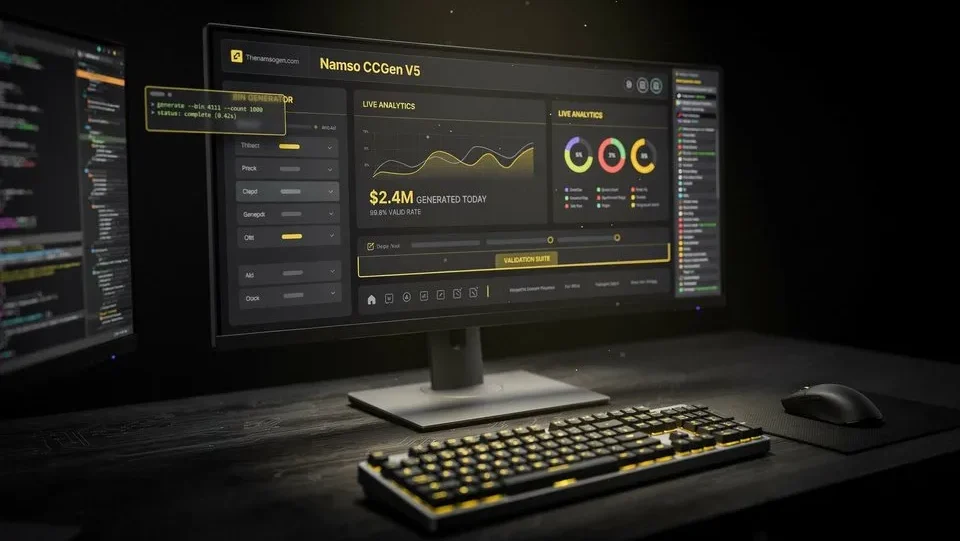
Earlier versions focused mainly on basic number generation. V5 expanded the experience by making BIN customization easier, improving generation speed, and simplifying bulk creation.
The change that matters most is not the interface. It is the workflow.
Instead of manually creating test values one by one, users can generate multiple card combinations from a selected BIN pattern within seconds. For developers running repeated checkout tests, that saves a surprising amount of time.
In practice, many testers use generated card data while building payment forms, validating input fields, checking API responses, and testing frontend validation rules before connecting a live payment processor.
How Does Namso CCGen V5 Actually Work?

Every generated number starts with a BIN, also known as a Bank Identification Number. The BIN represents the issuer and card category structure.
Once a BIN pattern is selected, the remaining digits are generated according to predefined rules. The final digit is calculated using the Luhn Algorithm, a mathematical checksum formula widely used in card number validation systems.
That last step is where many beginners get confused.
Passing the Luhn check does not make a card real.
A generated number can satisfy format validation while remaining completely unusable for financial transactions. Those are two very different things.
This distinction is often overlooked by websites that oversimplify how card generators operate.
Why Developers Continue Using Namso CCGen V5

Payment testing has become more complicated over the last few years.
According to the 2025 State of Software Quality report published by BrowserStack, testing complexity increased significantly as applications expanded across devices, browsers, and payment ecosystems. Teams now spend more effort validating user flows than they did just a few years ago.
That trend helps explain why tools like Namso remain relevant.
When developers need quick test inputs, generating card numbers manually becomes inefficient. A BIN-based generator provides predictable patterns that help identify validation errors faster.
What people miss about this process is that most testing failures happen before any payment gateway communication occurs.
A form field, JavaScript validation rule, or API request often breaks long before a transaction reaches a processor.
Common Testing Scenarios for Namso CCGen V5
E-commerce checkout forms remain one of the biggest use cases.
A developer creating a new checkout page may need dozens of sample numbers to verify field validation, formatting rules, and error handling.
Another common example appears during QA automation.
Testing frameworks frequently require large volumes of sample input data. Rather than manually creating hundreds of records, testers can generate structured data within minutes.
Educational environments represent another category.
Students learning payment processing concepts often use generated card formats to understand validation logic without exposing actual financial information.
Namso CCGen V5 vs Manual Test Data Creation
| Feature | Namso CCGen V5 | Manual Creation |
|---|---|---|
| Speed | Seconds | Time-consuming |
| Bulk Generation | Yes | Limited |
| BIN Support | Yes | Manual effort |
| Luhn Validation | Automatic | Manual calculation |
| Testing Efficiency | High | Moderate |
| Human Error Risk | Lower | Higher |
The table highlights why generators became popular among testing communities.
Manual creation still has value for small projects, but repetitive validation tasks become difficult to manage at scale.
Is Namso CCGen V5 Safe to Use?
Safety depends largely on where the tool is accessed.
The generator itself creates numerical test data. The larger risk usually comes from unofficial websites, modified APK files, misleading downloads, and cloned pages designed to attract traffic.
Experienced users generally prefer browser-based versions hosted on established sources rather than downloading unknown files from third-party platforms.
That approach reduces unnecessary security concerns.
Another misconception deserves clarification.
Generated numbers do not expose real account holders. The output is artificially created and intended for testing environments rather than real-world purchases.
Can Generated Cards Be Used for Real Payments?
No.
This question appears repeatedly because many newcomers misunderstand what the tool generates.
A payment card requires active account information, issuer authorization, account funding, fraud screening approval, and multiple verification layers.
Generated numbers lack those requirements.
Even if a number matches valid formatting standards, transaction approval depends on systems far beyond the visible card number itself.
That distinction explains why developers view these generators as testing utilities rather than payment tools.
Why Is Namso CCGen V5 Still Popular in 2026?
Software testing trends changed rapidly after the rise of AI-assisted development.
Developers now ship prototypes faster than ever. Faster development creates a greater need for quick validation resources.
Research from GitHub’s 2024 developer ecosystem reports showed increased adoption of automation tools across testing workflows. More automation creates demand for structured sample datasets.
Namso CCGen V5 fits naturally into that environment.
The tool solves a simple problem quickly.
Sometimes the most useful software is not the most complicated software. It is the software that removes repetitive work from the development process.
Final Thoughts
The real value of Namso CCGen V5 is not card generation itself. The value comes from saving time during testing, validation, and development workflows. Developers, QA engineers, and students continue using it because it removes repetitive tasks while providing structured test data that follows standard formatting rules. Understanding that purpose helps separate legitimate testing use from the misconceptions that often surround card generators.